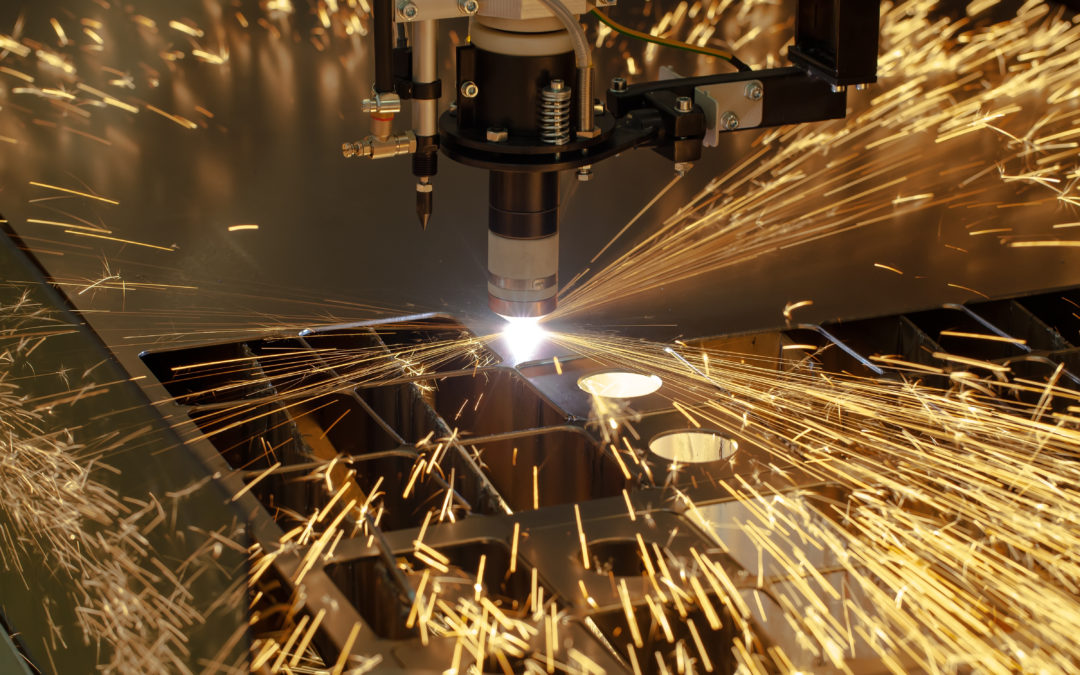
It’s a fact: the industry is becoming increasingly demanding in terms of project deadlines and complexity. Yet, unfortunately, skilled labor is becoming increasingly scarce. TopSolid’Cut was designed to address these challenges and provide sustainable solutions. The tool serves as a catalyst for digital transformation for sheet metal fabrication companies. Learn more.
Sheet metal fabrication and specialized CAD/CAM tools: What are they used for?
While every project is unique, the processes themselves can vary from one client to another. This diversity presents sheet metal fabrication companies with a major obstacle: the proliferation of client file formats (PDF, DXF, STEP, etc.). To complicate matters further, these files are often incomplete or contain incorrect information, forcing technical teams to make manual adjustments and modifications—a process that is not only time-consuming but also carries a high risk of error.
This issue is compounded by a growing difficulty in ensuring digital continuity between the design and manufacturing of parts. However, breaks in the digital chain result in considerable time losses and risks of non-compliance—which are all the more detrimental given that the industry demands a high level of precision.
Finally, despite the custom-made nature of many products, companies express a legitimate need to standardize their product lines and capitalize on their expertise. This standardization has two advantages: process optimization and reduced dependence on individual skills—at a time when the sector is facing a shortage of skilled labor.
See also – Sheet metal workers: What strategies can they implement to remain competitive?
TopSolid’Cut: Industry-Specific CAD/CAM Software Designed for Industrial Sheet Metal Fabrication
A complete digital workflow, from design to cutting
TopSolid’Cut offers a unified environment that supports the entire sheet metal fabrication process: design, flattening, nesting, and cutting are linked together in a continuous digital workflow. This integrated approach eliminates the traditional gaps between the different stages, which are a source of wasted time and errors.
Intelligent customer file recovery transforms a recurring challenge into an operational advantage. Automatic stitching reconstructs fragmented geometries, while sheet metal conversion via thickness recognition processes input data autonomously. Automatic identification of bends and deformations rounds out this system, allowing operators to focus on value-added tasks.
As for the interface, which is designed for field operators, it prioritizes intuitiveness without sacrificing functionality. The customizable post-processors also ensure direct integration with all cutting and punching machines in the workshop, guaranteeing compatibility with your existing and future equipment.
Flexibility in file processing and design
While the variety of customer file formats can be a major obstacle, TopSolid’Cut addresses this issue. And for good reason: the solution natively supports commonly used neutral and proprietary formats, such as DXF, STEP, IGES, and Parasolid. This broad compatibility eliminates format constraints and ensures seamless integration with the software ecosystems of your customers and partners.
In terms of design, the creation of sheet metal parts from simple or complex surfaces can be adapted to any scenario, whether the parts are derived from third-party systems or designed directly within the TopSolid environment. The flattening process—for both solid and wireframe models—maintains associativity with the 3D models, ensuring data consistency throughout the design evolution.
Automating repetitive tasks and ensuring reliable cuts
Automation is the foundation of modern industrial efficiency. TopSolid’Cut addresses this challenge with a comprehensive approach that covers the entire manufacturing process, from job planning to machine control.
At the heart of the process, automated machining relies on intelligent recognition of special tools and the use of customizable machining macros. This standardization of practices improves the reproducibility of results while maintaining the flexibility required for specific production runs. Similarly, automatic batch unfolding optimizes productivity for large production runs, while automatic recalculation in the event of geometric changes preserves the integrity of manufacturing sequences. This adaptability is essential for meeting the flexibility requirements of modern industrial production.
Optimization continues at the machine setup stage. Turret assembly is performed automatically according to defined industry standards or uses predefined libraries to minimize tool changeover times. This systematic approach also enables the automated management of complex cuts—slitting, common cutting, shearing—based on predefined production parameters, drastically reducing the need for manual intervention.
Effective management of production constraints is reflected in the built-in control of material removal methods: micro-clips, hatches, unloaders, etc. This consideration of handling constraints optimizes cycle times while improving the ergonomics of workstations. At the same time, nesting benefits from sophisticated algorithms that select the optimal placement, thereby maximizing material utilization. This results in directly measurable cost savings on production costs.
Finally, know-how is capitalized on through the reuse of production sequences, transforming individual expertise into the company’s collective assets. This systemic approach addresses the strategic challenges of skills transfer in a context of a shortage of skilled labor, ensuring the sustainability of industrial performance.
See also – Auto Body Repair: 5 Tools to Make the Industry More Accessible
What are the concrete benefits for your sheet metal fabrication business?
Beyond the technical aspects, TopSolid’Cut generates operational gains that can be directly measured in terms of industrial performance. In fact, there are numerous benefits:
- up to a 30% reduction in programming time,
- reduced scrap thanks to precise paths and automatic validation,
- centralization of parts to be produced, optimized production start-up, and anticipation of machine-side bottlenecks,
- elimination of the risk of errors through the automatic generation of work order forms and labels,
- improved traceability through automatic part marking and rigorous version control,
- smooth production management thanks to native integration with ERP systems,
- ergonomics designed to help teams quickly develop their skills.
By integrating TopSolid’Cut into your manufacturing process, you’re leveraging a powerful driver of profitability. That’s because adopting a CAD/CAM tool like this for sheet metal fabrication lays the groundwork for creating a virtuous cycle of collaboration, both internally and externally. The result: more productive teams, a greater ability to handle projects with varying geometries, and satisfied customers.
Want to discover how TopSolid’Cut can transform your production? Our technical advisors are here to help. Request a demo!