
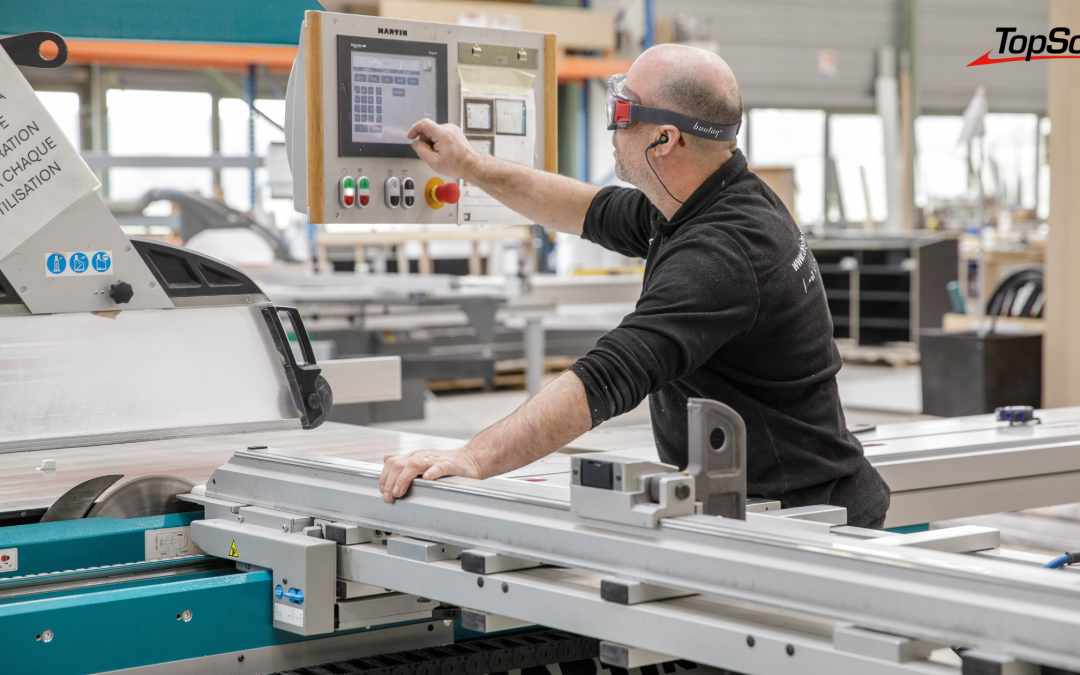
Photo credits: Design Bois (69), a specialist in high-end interior design, as well as the design and fabrication of custom woodworking solutions, Stéphane Couchet©
In woodworking shops, the digital transition brings hope… as well as raising concerns. Caught between the need to remain competitive and the desire to preserve a craft that has sometimes been passed down through generations, artisans and small businesses in the sector are trying to find their way. Yet technology and tradition are not incompatible. When used thoughtfully, digital tools can even enhance professional expertise without compromising it. Here’s why.
Understanding Digital Resistance to Better Support It
The reluctance of woodworking professionals toward digitization is not simply a matter of being resistant to change. It stems from fundamental concerns about the very essence of the trade. And for good reason: woodworking is a sensory activity that engages:
- touching it to assess its surface condition,
- the sense of smell that recognizes each scent,
- the trained eye that reads the grain and anticipates how the material will behave.
How could a screen ever replace such skill and such sensations?
This fear of dehumanization goes hand in hand with a fear of standardization. Yet every artisan cultivates methods that are unique to them and that have made their reputation. The introduction of general-purpose CAD/CAM tools, designed for the metal or plastics industries, has often reinforced this sense of mismatch, since wood has retained all its nobility and unique characteristics, which vary from one species and one plank to another.
The economic argument also carries significant weight for small businesses. Between the initial investment, staff training, and the time it takes to adapt, the return on investment seems uncertain. Not to mention the challenge of passing on the craft: how can you train an apprentice in artisanal excellence if they spend more time in front of a computer than at the workbench?
These concerns deserve to be heard, as they highlight real risks. But they also obscure the opportunities offered by digitalization designed specifically for the woodworking industry.
>>> See also – How the Digital Transition Is Transforming the World of Industry
When Digital Technology Fuels Artisans’ Creativity
Far from replacing human expertise, the right digital tools act as amplifiers of skills. They handle repetitive tasks—such as flow rate calculations, generating technical drawings, and optimizing cut lists—to free up time for what truly adds value: creative design, hand-finishing, and personalized customer advice.
The precision offered by CAD/CAM even opens up new creative horizons. For example, assemblies of a complexity that would be nearly impossible to achieve manually are now within reach. 3D simulation allows designers to explore bold shapes and test different variations without wasting raw materials. A carpenter can present a client with a realistic visualization of the project, integrated into its future environment, which facilitates approval and reduces misunderstandings.
Intelligent raw material management also yields significant benefits. Algorithms for optimizing cutting plans take into account the grain direction, defects to avoid, and offcuts to be reused. Furthermore, this streamlining does not result in uniform production. On the contrary, it allows the finest boards to be reserved for premium pieces and optimizes the use of each log!
The example of Entrawood, a specialist in high-end office furniture, illustrates this successful synergy. The company modernized its production process with TopSolid’Wood while retaining its traditional woodworking methods for finishing. The result: design times cut in half and an increased ability to customize each order according to architects’ specific requests.
>>> See also – TopSolid and Entrawood: A Technological Revolution in Office Furniture
TopSolid’Wood: A business-oriented approach that honors the artisanal tradition
TopSolid’Wood’s strength lies in its design, which is specifically tailored to the woodworking industry. Unlike general-purpose CAD/CAM solutions, the software natively incorporates the industry’s specific requirements and terminology, from preliminary design through to manufacturing.
In practice, this business-focused approach translates into dedicated features that appeal to professionals:
- managing traditional wood joints,
- taking into account the specific properties of materials (panels, solid materials),
- integration of standard hardware components available on the market.
The system allows users to design in 3D while automatically generating manufacturing drawings, bills of materials, and machine programs tailored to the workshop’s equipment.
One of the solution’s major strengths is the digital continuity it offers. Data flows seamlessly between design, processes, and manufacturing. This fluidity eliminates the need for re-entry—which is both error-prone and time-consuming—while still allowing for human intervention where artisanal expertise adds value.
The tool was also designed to allow for a gradual learning curve, enabling each company to move forward at its own pace. A very small business can therefore start by digitizing only its quotes and cutting plans, then move on to 3D design and the generation of machine programs at a later stage. This step-by-step skill development respects the culture of each workshop without imposing a sudden disruption to established—and proven—work methods.
The Keys to a Successful Digital Transition
Before getting started, it is essential to emphasize the importance of involving teams from the planning phase onward. Their participation is indeed relevant and indispensable, since operators are the ones most directly affected by changes to their processes. Furthermore, this concept of co-creation offers a significant advantage: it transforms resistance into ownership.
As for the solution’s rollout, it begins with identifying everyday pain points: time-consuming quotes, measurement errors, and rough material optimization. Digitizing these non-value-added tasks first yields immediate benefits that make it easier to gain buy-in.
Training, for its part, must be grounded in practical experience. Rather than theoretical exercises, working directly on ongoing projects allows people to learn by doing. Early successes and initial insights are worth more than any amount of talk!
Digital modernization does not spell the end of woodworking craftsmanship. On the contrary, by freeing professionals from repetitive technical tasks, it allows them to refocus on what truly sets them apart: creativity, expert advice, and exceptional finishes.
Furthermore, companies that successfully navigate this transition do not abandon their culture; rather, they enrich it with tools that greatly enhance its potential. At a time when customers are seeking both personalization and responsiveness, this combination of traditional expertise and digital efficiency is becoming a decisive competitive advantage.
Convinced? Contact us for a demo.