The Benefits of APIs for the Integration and Automation of Industrial Systems

The Benefits of APIs for the Integration and Automation of Industrial Systems

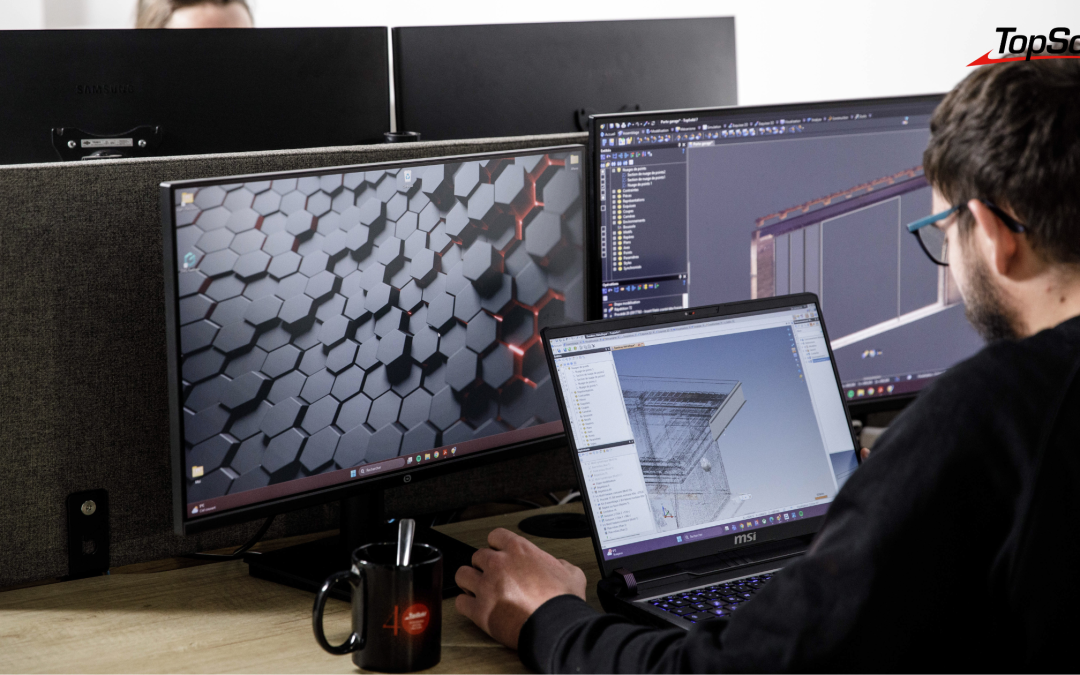
Photo credits: Simon (39), a specialist in the manufacture of plastic injection molds and high-precision machining; Stéphane Couchet©


Standard CAD/CAM software covers 80% of business needs. The remaining 20% consists of specific processes: specialized calculations, interfaces with existing systems, recurring automation tasks, and so on. These are all tasks that are costly in terms of both time and effort—and risky, to boot.

This limitation of standard solutions hinders productivity and competitiveness. Today, modern workshops need a CAD/CAM workflow that is seamlessly integrated into their ecosystem. And it is precisely at this level that digital continuity becomes a strategic issue.

TopSolid’Api addresses this challenge by transforming your CAD/CAM software into a customized business solution while automating data flows between your various systems. Here’s how it works.

Develop business applications integrated with your CAD environment using TopSolid’Ads


A comprehensive software development kit (SDK)

TopSolid’Ads is an SDK (Software Development Kit) that provides access to the core of the TopSolid engine. Unlike generic APIs that allow only limited actions, TopSolid’Ads offers full access to the software’s native features: modeling, calculations, data management, toolpath generation, and more…

The platform is built on modern technologies, which make development accessible to technical teams who are thoroughly familiar with these environments. This technical advantage facilitates the creating applications that are fully integrated with TopSolid, or developing standalone tools that harness the power of CAD/CAM platforms.

See also – API: How can TopSolid be tailored to your needs?>>


Who is TopSolid’Ads really for?

TopSolid’Ads targets three types of users.

First, companies with very specific needs and whose business processes are not covered by standard solutions. Specifically, the tool allows you to develop your own calculation modules and directly integrate your sizing algorithms or management rules into the design process. The result: the engineering department can automatically apply best practices, eliminating the risk of error.

Second, system integrators and partner software vendors whose vertical solutions are designed for specific industries (carpentry, metalwork, interior design, etc.). In these contexts, TopSolid’Ads allows you to create interfaces fully tailored to their end customers (custom data entry forms, configuration wizards for standard products, business dashboards, etc.).

Finally, R&D departments and advanced engineering firms that want to innovate in their methods and build bridges with their existing ecosystem. For these stakeholders, TopSolid’Ads provides access to the CAD engine to develop custom connectors with their ERP, PLM, or any other production management tool. This ensures controlled flow of technical data and thereby enhances competitiveness.


The Partnership Model with the TopSolid Team

The difference between TopSolid’Ads and other APIs on the market lies in the support provided by TOPSOLID, thanks to a team dedicated exclusively to making the documentation easier to understand.

This partnership model ensures:

  • state-of-the-art technical support,
  • targeted training programs to promote skill development,
  • priority access to platform updates.

The result: a development project that is less exposed to risks and truly effective, enabling faster deployment of your business applications.

TopSolid’Automation to streamline data flows and automate repetitive tasks


While TopSolid’Ads lets you create custom features, TopSolid’Automation lets you deploy them at scale. How? By automating repetitive processes and connecting TopSolid to your digital production chain.

The tool is based on three pillars: data exchange, process automation, and automation of program import and generation.

In practical terms, TopSolid’Automation streamlines the flow of information between TopSolid and your other systems, as data is transferred automatically without the need for manual re-entry.. This applies to bill of materials (from the ERP system), retrieving technical parameters from a configurator, and exchanging data with a management system.

Finally, TopSolid’Automation supports the automation of data imports and the generation of technical documents (drawings, machining, ISO code, etc.). These processes can run autonomously, ensuring that your CAD/CAM workflow operates continuously—and always with maximum efficiency.

>>> See also –TopSolid’Automation: Automation at Your Fingertips

What are the benefits of Industry 4.0?


TopSolid’Api is fully aligned with the Industry 4.0 approach by creating a continuous digital workflow, from the design office to the shop floor. And for good reason: this new era depends on the ability to share information seamlessly, in real time, across all links in the value chain.

This approach ensures interoperability with your existing ecosystem. TopSolid thus plays a central role in ensuring complete traceability of technical data, as well as responsiveness and reliability.

Some technical and practical information


While many API solutions leave their users more or less to fend for themselves, TOPSOLID takes a partnership-based approach that places modernity and clarity at the heart of the process. The goal is to provide you with a True, in-depth access to the CAD engine, without complexity, and with highly advanced customization options.

The Synergy of TopSolid’Api: From Customization to Mass Production


The true strength of TopSolid’Api lies not in its individual components, but in how they complement one another. On the one hand, TopSolid’Ads allows you to tailor TopSolid to the specific requirements of your business. On the other hand, TopSolid’Automation enables these developments to operate at scale by automating their execution and orchestrating daily data flows.

This integration transforms standard CAD/CAM software into a truly integrated industrial platform. All of this, tailored to your specific needs and your own digital ecosystem.

As for the benefits, they are clearly evident in the day-to-day operations of your teams: time saved by automating repetitive tasks, elimination of data entry errors, improved quality, reduced scrap… Full traceability of technical data also facilitates audits and ensures compliance. Finally, agility is enhanced, as adjustments no longer depend on software vendors but on your own priorities.

This technical autonomy, combined with support from the TOPSOLID team, puts you in a unique position to address the challenges of digital transformation. It’s no longer a matter of simply enduring technological changes, but rather of customize them to suit your pace and goals.

Optimizing methods, developing industry-specific solutions, creating tailored tools… More than just a technological investment, TopSolid’Api serves as a catalyst for transformation, helping you build the digital production chain you truly need—both today and tomorrow.

Find all the information about TopSolid’Api in our dedicated brochure.

Want to learn more? Contact our team to schedule a demo.
Woodworking: How Can We Modernize Production Without Losing Traditional Craftsmanship?

Woodworking: How Can We Modernize Production Without Losing Traditional Craftsmanship?

Photo credits: Design Bois (69), a specialist in high-end interior design, as well as the design and fabrication of custom woodworking solutions, Stéphane Couchet©

In woodworking shops, the digital transition brings hope… as well as raising concerns. Caught between the need to remain competitive and the desire to preserve a craft that has sometimes been passed down through generations, artisans and small businesses in the sector are trying to find their way. Yet technology and tradition are not incompatible. When used thoughtfully, digital tools can even enhance professional expertise without compromising it. Here’s why.

Understanding Digital Resistance to Better Support It

The reluctance of woodworking professionals toward digitization is not simply a matter of being resistant to change. It stems from fundamental concerns about the very essence of the trade. And for good reason: woodworking is a sensory activity that engages:

  • touching it to assess its surface condition,
  • the sense of smell that recognizes each scent,
  • the trained eye that reads the grain and anticipates how the material will behave.

How could a screen ever replace such skill and such sensations?

This fear of dehumanization goes hand in hand with a fear of standardization. Yet every artisan cultivates methods that are unique to them and that have made their reputation. The introduction of general-purpose CAD/CAM tools, designed for the metal or plastics industries, has often reinforced this sense of mismatch, since wood has retained all its nobility and unique characteristics, which vary from one species and one plank to another.

The economic argument also carries significant weight for small businesses. Between the initial investment, staff training, and the time it takes to adapt, the return on investment seems uncertain. Not to mention the challenge of passing on the craft: how can you train an apprentice in artisanal excellence if they spend more time in front of a computer than at the workbench?

These concerns deserve to be heard, as they highlight real risks. But they also obscure the opportunities offered by digitalization designed specifically for the woodworking industry.

>>> See also – How the Digital Transition Is Transforming the World of Industry

When Digital Technology Fuels Artisans’ Creativity

Far from replacing human expertise, the right digital tools act as amplifiers of skills. They handle repetitive tasks—such as flow rate calculations, generating technical drawings, and optimizing cut lists—to free up time for what truly adds value: creative design, hand-finishing, and personalized customer advice.

The precision offered by CAD/CAM even opens up new creative horizons. For example, assemblies of a complexity that would be nearly impossible to achieve manually are now within reach. 3D simulation allows designers to explore bold shapes and test different variations without wasting raw materials. A carpenter can present a client with a realistic visualization of the project, integrated into its future environment, which facilitates approval and reduces misunderstandings.

Intelligent raw material management also yields significant benefits. Algorithms for optimizing cutting plans take into account the grain direction, defects to avoid, and offcuts to be reused. Furthermore, this streamlining does not result in uniform production. On the contrary, it allows the finest boards to be reserved for premium pieces and optimizes the use of each log!

The example of Entrawood, a specialist in high-end office furniture, illustrates this successful synergy. The company modernized its production process with TopSolid’Wood while retaining its traditional woodworking methods for finishing. The result: design times cut in half and an increased ability to customize each order according to architects’ specific requests.

>>> See also – TopSolid and Entrawood: A Technological Revolution in Office Furniture

TopSolid’Wood: A business-oriented approach that honors the artisanal tradition

TopSolid’Wood’s strength lies in its design, which is specifically tailored to the woodworking industry. Unlike general-purpose CAD/CAM solutions, the software natively incorporates the industry’s specific requirements and terminology, from preliminary design through to manufacturing.

In practice, this business-focused approach translates into dedicated features that appeal to professionals:

  • managing traditional wood joints,
  • taking into account the specific properties of materials (panels, solid materials),
  • integration of standard hardware components available on the market.

The system allows users to design in 3D while automatically generating manufacturing drawings, bills of materials, and machine programs tailored to the workshop’s equipment.

One of the solution’s major strengths is the digital continuity it offers. Data flows seamlessly between design, processes, and manufacturing. This fluidity eliminates the need for re-entry—which is both error-prone and time-consuming—while still allowing for human intervention where artisanal expertise adds value.

The tool was also designed to allow for a gradual learning curve, enabling each company to move forward at its own pace. A very small business can therefore start by digitizing only its quotes and cutting plans, then move on to 3D design and the generation of machine programs at a later stage. This step-by-step skill development respects the culture of each workshop without imposing a sudden disruption to established—and proven—work methods.

The Keys to a Successful Digital Transition

Before getting started, it is essential to emphasize the importance of involving teams from the planning phase onward. Their participation is indeed relevant and indispensable, since operators are the ones most directly affected by changes to their processes. Furthermore, this concept of co-creation offers a significant advantage: it transforms resistance into ownership.

As for the solution’s rollout, it begins with identifying everyday pain points: time-consuming quotes, measurement errors, and rough material optimization. Digitizing these non-value-added tasks first yields immediate benefits that make it easier to gain buy-in.

Training, for its part, must be grounded in practical experience. Rather than theoretical exercises, working directly on ongoing projects allows people to learn by doing. Early successes and initial insights are worth more than any amount of talk!

Digital modernization does not spell the end of woodworking craftsmanship. On the contrary, by freeing professionals from repetitive technical tasks, it allows them to refocus on what truly sets them apart: creativity, expert advice, and exceptional finishes.

Furthermore, companies that successfully navigate this transition do not abandon their culture; rather, they enrich it with tools that greatly enhance its potential. At a time when customers are seeking both personalization and responsiveness, this combination of traditional expertise and digital efficiency is becoming a decisive competitive advantage.

Convinced? Contact us for a demo.

Production Data: Why Industrial SMEs Need to Break Their Reliance on Excel

Production Data: Why Industrial SMEs Need to Break Their Reliance on Excel

Photo credit: MSK (51), a metalwork specialist that designs and manufactures custom staircases, gates, and glass canopies, Stéphane Couchet ©

Excel remains the preferred management tool in many industrial SMEs. Versatile and familiar to everyone, it seems to meet all needs. However, behind this apparent simplicity lie major risks to competitiveness and compliance. Between data entry errors, multiple versions, and a lack of real-time traceability, spreadsheets are showing their limitations when it comes to meeting today’s market demands. It’s time to explore alternatives tailored to the realities of SMEs.

Excel: The Indispensable Swiss Army Knife for Industrial SMEs

Used in most industrial small and medium-sized enterprises, Excel is mastered by all generations of shop floor supervisors and operators. It is recognized for its remarkable versatility, as it allows users to manage quotes, calculate costs, plan machine utilization, track production orders (POs), analyze overall equipment effectiveness (OEE), and even create dashboards. All of this can be done without any additional investment, since the tool is included in the Office suite, which is often purchased for all administrative and sales tasks.

When Flexibility Becomes a Trap

However, despite its widespread use at all levels of the workshop (from operators to managers), Excel also has its limitations. Among the challenges frequently encountered are broken formulas, broken links between files, and data accidentally overwritten—and this list is by no means exhaustive. Add to this the proliferation of versions, which can cause conflicts in document management and, by extension, in the production chain.

The consequences are numerous and costly:

  • time spent on manual consolidation and cross-checks,
  • decisions based on outdated data,
  • the growing complexity of the process for welcoming newcomers, who struggle to navigate the multitude of files and data recorded in an increasingly fragile system.

Audits and Traceability: When Excel Puts Your Certifications at Risk

While Excel has been widely adopted and has proven its worth on the shop floor, it also appears to have reached the end of its useful life and is no longer suited to the industry’s requirements. Traceability standards are indeed becoming increasingly stringent, yet it remains impossible to guarantee data integrity with Excel.

One thing leading to another, customer relations are also compromised due to longer response times when complaints are filed.

The result: companies risk losing their certifications, being excluded from bids, and facing contractual penalties. It’s a tricky combination with serious financial repercussions.

>>> See also – Industrial Traceability: How Can You Improve the Quality of Your Products and Processes?

Technical and Financial Risks of Excel

Aside from potential data entry errors, the data entered into Excel actually comes from design and manufacturing systems: CAD drawings, bills of materials, and production work orders. This manual re-entry breaks the digital continuity and creates a dangerous gap between design and production.

In this scenario, it is possible that the design department might make a change to dimensions or materials that is not reflected in the workshop’s Excel files. This discrepancy would result in production being launched based on outdated information and lead to nonconformities, whereas TopSolid automatically updates bills of materials and work instructions.

Similarly, specifying a new material requires a manual recalculation of machining times and costs. In Excel, simply omitting a single cell can cause the quote to be truncated. However, with TopSolid, the recalculation is automatic thanks to the material libraries.

Migrating Without Turning Everything Upside Down: A Gradual and Controlled Transition

Given these findings, the temptation to maintain the status quo remains strong. Transitioning to a new system is daunting: it requires a significant investment, faces resistance to change, and carries the risk of disrupting production during the transition… However, a methodical and gradual approach makes it possible to ensure a successful digital transformation without disrupting the workshop’s operations.

The first step is to identify the critical processes that need to be secured as a priority. Work orders, bills of materials, and production schedules are generally the top three priorities. Once these foundational data sets are reliably stored in a centralized system, they eliminate a large portion of the risks mentioned earlier. Rather than undertaking a radical digitization effort, it is therefore better to start with a limited scope (a pilot workshop, a production line) and then expand gradually.

When it comes to choosing a tool, small and medium-sized businesses often assume they need a complex and expensive ERP system to take the plunge. However, digital continuity solutions such as CAD, CAM, PDM, and ERP—like TopSolid—offer a logical alternative: they secure and automate data updates throughout the entire data lifecycle. This eliminates the need to re-enter information from CAD models into Excel.

The benefits become apparent quickly: a drastic reduction in data entry errors, the time spent searching for information cut by two or three, and renewed confidence in shared data.

However, change management remains crucial. Teams need to be trained, involved in setting up the new tools, and see their initial successes recognized in order to better embrace this change.

Finally, such a change is not intended to eliminate Excel from the landscape. Rather, it is about restoring Excel to its proper role: that of a tool for ad hoc analysis and simulation, rather than a mission-critical management system.

>>> See also – CFAO: 3 Reasons Not to Neglect Customer Service and Training When Choosing a Solution

From Theory to Practice: A Successful Transformation in 6 Months

Several success stories illustrate how such a transition can be successfully managed. Generally speaking, the starting point is the same: dozens of Excel files deemed critical, several hours spent each day manually consolidating data, and recurring errors despite procedures that are considered well-designed.

The turning point came during a major client audit, when it proved impossible to quickly retrieve the complete history of a defective batch because the data was scattered across several spreadsheets… whose versions were unclear.

Management then initiates a structured process, which involves mapping information flows, identifying truly sensitive data, and analyzing available solutions. This is where TopSolid stands out, with its ability to natively integrate CAD, CAM, and document management into a unified environment. The strength of this approach lies in restoring digital continuity from design to production.

What about the migration? It’s a gradual process: first the engineering department, then the teams in charge of the processes, and finally the shop floor operators.

Results are visible as early as 6 months after the solution is deployed.

  • No more version errors in the drawings, as every change is tracked and approved in the system.
  • The traceability of work orders is now comprehensive, from launch to delivery.
  • Response times to customer requests are significantly reduced thanks to the centralization and accessibility of information.
  • The next audit is streamlined thanks to optimal document management.

Beyond the numerical metrics and the commercial and financial impacts, it is the cultural transformation that stands out. Teams are more open to collaboration thanks to a single, reliable database. In addition, skill development is accelerated and valued through operators’ direct access to 3D models and up-to-date product lines. The challenge is no longer to search for the right information but to leverage the full wealth of available data with just a few clicks to get the most out of it.

As data becomes increasingly strategic in the industry, securing it is no longer an option but a necessity for remaining competitive. The question is no longer whether to move beyond Excel, but when and how to do so intelligently. Industrial SMEs that take the plunge with a tailored solution like TopSolid quickly discover that they do not lose flexibility. On the contrary, they gain in reliability, peace of mind, and competitiveness.

Industrial Subcontracting: How Can You Leverage Your Expertise to Stand Out?

Industrial Subcontracting: How Can You Leverage Your Expertise to Stand Out?

Photo credits: Laser cutting at our client Ferrier (39), a specialist in fine sheet metal work, Stéphane Couchet ©

With machine catalogs that are similar from one workshop to the next and increasingly aggressive low-cost competition, small and medium-sized subcontracting companies find themselves facing a perplexing challenge. How can they justify their prices and win contracts? The solution lies not in equipment, but in the expertise they have built up.

However, this intangible capital too often remains invisible, which makes it difficult to make a compelling business case. How can we get back in the game and highlight our main competitive advantage? Let’s explore this issue.

Technical expertise: A strategic asset for subcontractors

The industrial subcontracting market has never been so paradoxical. On the one hand, clients are demanding more and more: shorter lead times, maximum flexibility, flawless traceability, compliance with the strictest standards… On the other hand, price pressure is intensifying, particularly with the arrival of international competitors offering rates that defy all European economic logic.

Faced with this impossible equation, many SME leaders are betting on upgrading their machinery. It’s an understandable reaction, but it’s not enough. Why? Because your competitors are deploying—more or less—the same technical and sales resources (machining center catalogs, CAM software, etc.). Equipment alone is therefore no longer a differentiating factor.

Thus, the true competitive advantage lies elsewhere. It lies in your ability to solve your customers’ complex problems—a capability you’ve developed over the years. But as unique as it may be, this expertise suffers from being invisible. During a request for proposals, a buyer cannot necessarily assess your specific expertise in aerospace alloys if it exists only in the memory of your shop foreman. But how can you commercially leverage optimization methods that aren’t documented anywhere?

For SME leaders, the challenge is becoming clear: to transform this expertise—which is currently hidden and informal—into a tangible and demonstrable competitive advantage.

>>> See also – Custom Configuration: Why Should Small and Medium-Sized Enterprises (SMEs) Adopt It?

From Individual Expertise to Collective Intelligence: The Art of Formalizing One’s Expertise

The first step in this transformation: precisely identifying what constitutes your technical DNA.

  • What machining methods have you refined to address specific challenges?
  • What special tools have you developed in-house to reduce rework?
  • What programming tips can optimize your operators’ productivity when working on certain geometries?

This mapping of critical expertise often reveals surprises. Processes considered routine internally turn out to be major differentiators in the marketplace. Similarly, certain skills that the company rarely highlights are actually untapped commercial gems.

Failing to formalize this expertise means accepting considerable risks in the event of an employee’s departure, the arrival of new hires, or the need to produce a new series in large volumes. The company then finds itself in a vulnerable position or, at the very least, at a commercial disadvantage.

Methodical capitalization is therefore essential:

  • document each production run, detailing not only the parameters but also the reasons behind the choices made,
  • create libraries of standard tools along with their optimal conditions of use,
  • organize technical solutions by part family to create a useful knowledge base.

Be careful, however, not to overdo standardization. The goal is not to turn your workshop into a rigid factory, but to combine industrial efficiency with the artisanal flexibility that is your strength. In other words, standardize basic methods while preserving the ability to adapt and innovate. It is this balance that allows you to increase productivity without losing agility.

The organizational impact of this formalization goes beyond mere technical considerations: operators see their expertise recognized, documented, and transferable. This recognition strengthens commitment and a sense of belonging—key factors in attracting and retaining talent in a sector facing human resources challenges.

>>> See also – Recruitment in Industry: Attracting Young Talent with Innovative Production Tools

Making the Invisible Visible Through Digitization

Digitalization has the power to transform technical expertise into compelling sales pitches. Modern digital tools make it possible to build comprehensive technical portfolios—backed by data and simulations.

Thanks to standardized product lines and digital tool libraries, expertise and speed have become key selling points.

  • You can instantly showcase similar successful projects, reassure clients of your ability to meet the specifications, and even suggest improvements based on your experience;
  • Similar technical solutions for costing a new part are quickly identified, adapted, and optimized;
  • The quote arrives faster, is more accurate, and includes well-reasoned technical options.

Digital traceability also meets growing certification requirements. Automatic documentation of production parameters, archiving of quality control records, and tracking of process changes—these are all elements that facilitate customer audits and strengthen industrial credibility, both in terms of compliance and commercial considerations.

Finally, digitalization is opening up new ways to collaborate with customers. You are no longer just selling production capacity, but technical expertise that is accessible and interactive, thanks to features that support co-design and industrial efficiency.

This is exactly what TopSolid enables by structuring all of your processes. The solution natively integrates tool management with optimal cutting conditions, the creation of reusable manufacturing sequences, machining simulation to validate processes before production, and automatic documentation to showcase your expertise. Every project enriches your knowledge base, every technical success becomes a selling point, and every process innovation delivers a sustainable competitive advantage.

>>> See also – Mechanical Engineering: 5 Good Reasons to Begin a Digital Transformation Process

How does this emphasis on expertise translate into commercial success?

Real-world examples speak for themselves. Subcontractors’ ability to offer technical alternatives (alternative designs, guaranteed short lead times, tolerances tighter than market standards, etc.) fundamentally changes their positioning. You are no longer just another shop capable of machining to drawings, but a technical expert who challenges design firms with a shared goal: efficiency. And that is what creates your added value!

The return on investment of this approach can be measured in several ways:

  • a drastic reduction in rework thanks to the implementation of best practices,
  • an increase in the quote-to-order conversion rate through better technical alignment and faster responses,
  • building customer loyalty among those who no longer see you as just a supplier, but as a partner that creates value,
  • the ability to advocate for fair prices.

The expertise that sets you apart from your competitors becomes a competitive advantage only if it is formalized, documented, and, above all, communicable. Given the current context, the process of knowledge capitalization and digitization is no longer optional—it determines your ability to stand out from the crowd.

With a tailored digital solution like TopSolid, this transformation becomes structured and sustainable. Ready to put your expertise to practical use? Contact our teams for a demo.

Producing Quickly and Effectively: Industrial SMEs Facing the Challenge of Customer Deadlines

Producing Quickly and Effectively: Industrial SMEs Facing the Challenge of Customer Deadlines

Behind the impressive figures for small and medium-sized enterprises in French industry lies a grueling daily reality. With customers who are increasingly in a hurry and have ever-growing demands for quality and customization, production lead times have become the key to success.

This pressure affects all industrial SMEs, whether they manufacture under their own brand or as subcontractors. How can we turn this constant challenge into an opportunity and maintain excellence without compromising?

Time pressure: a daily reality for industrial SMEs

For industrial SMEs, lead times are no longer merely an operational constraint—they are critical to their survival. Customers are imposing increasingly tight schedules, while expectations are shifting toward greater responsiveness and flexibility.

This pressure is particularly intense in the subcontracting sector, where companies—and jobs—depend directly on the prime contractors. In this context, SMEs in a weak position cannot always negotiate favorable terms and must absorb these constraints… while maintaining their competitiveness.

But small and medium-sized businesses that produce their own product lines are not spared. E-commerce has accustomed consumers to express delivery, large retailers demand rapid inventory turnover, and international competition imposes ever-higher standards for responsiveness.

In this tense environment, meeting commitments has become a daily balancing act. Production and planning teams are playing it by ear, juggling urgent orders, technical setbacks, and limited resources.

When the race against time becomes toxic

This constant pressure to meet deadlines creates a snowball effect, leading to a rise in production errors, increased delays, and a decline in quality. And this is happening even though the cost of poor quality can account for up to 5 percent of manufacturers’ annual revenue, according to a study by AFNOR.

The consequences are not merely economic. The constant stress faced by production managers leads to high turnover, complicates recruitment, and demotivates teams that are essential to performance. As a result, the organization loses its ability to operate smoothly: without reliable workforce planning, it is impossible to anticipate raw material needs, optimize production resources, or make commitments to customers with confidence.

Finally, the most concerning issue remains the impact on cash flow. Production delays result in penalties, scrap is costly, and the inability to invoice on time creates financial strain. With margins already under pressure, these losses quickly become unsustainable.

>>> See also – Industrial Production Monitoring: At the Heart of Process Automation

Anticipating and Planning: The New Drivers of Competitiveness

In the face of these challenges, the solution is not to constantly produce faster, but to plan ahead in order to produce better. The industrial SMEs that stand out today are those that have replaced a reactive approach with a proactive one—by gaining visibility into their workload and creating reliable schedules. This approach radically transforms their relationship with their customers: they can commit to realistic deadlines… and meet them.

The benefits are measurable and tangible.

  • Better planning reduces downtime on production lines, optimizes the use of human and material resources, and lowers the hidden costs associated with emergencies.
  • Customer service efficiency is improving.
  • Teams feel more at ease.
  • The company gains greater financial predictability.

Reliability is becoming an undeniable competitive advantage given the pressure all players are under. This is especially true since customers naturally favor manufacturers who can meet their commitments, even if their prices aren’t the lowest.

How can we improve responsiveness without compromising quality?

Moving from reactive management to a proactive organization requires structuring production processes. The first step is to accurately map out manufacturing flows to identify bottlenecks and sources of wasted time. This analysis then makes it possible to standardize best practices and eliminate steps that do not add value.

Digitalization plays a key role here. Modern ERP-MPS solutions centralize information and provide a real-time overview, from machine load calculations to procurement management. Workload schedules become dynamic, automatically adjusting based on actual orders and on-site constraints. This allows production managers to simulate different scenarios, anticipate overloads, and intelligently allocate work.

However, tools alone are not enough without team buy-in. Training operators, managers, and planners on these new systems ensures that they embrace them. Once everyone understands how their involvement impacts overall performance, a true culture of continuous improvement takes root, empowering employees to play an active role in optimizing processes and production.

>>> See also – How does a CAD/CAM/ERP/PDM solution help increase your company’s productivity?

Manage your business with confidence using the right tools

The real challenge for industrial SMEs often remains the integration of their tools. Many still work with disconnected systems: CAD on one side, sales management on the other, and Excel spreadsheets for planning. This fragmentation leads to multiple data entries, which are sources of errors and wasted time. Worse still, decisions are made based on outdated or incomplete data, compromising the reliability of commitments.

Conversely, companies that have an integrated management tool take their operations to a whole new level. And for good reason: digital continuity between design, processes, ERP, and the shop floor eliminates information gaps. A change in a quote is automatically reflected in the schedule, production routes are adjusted based on machine availability, and full project traceability facilitates quality monitoring. This synchronization makes it possible to accurately calculate workload before committing to a deadline, receive proactive alerts in case of deviations, and respond quickly to unforeseen events.

TopSolid perfectly illustrates this integrated approach. By combining computer-aided design, the definition of manufacturing methods, and production management within a unified environment, the solution provides industrial SMEs with this essential cross-functional perspective.

This integration isn’t just a technical convenience—it’s a strategic tool that helps you stay on schedule and confidently meet your commitments to your customers. In an industry where every day counts, where even the smallest mistake comes at a cost, and where reputation is built on reliability, having the right tools makes all the difference. Contact our teams to discuss implementing an ERP solution in your workshop.

From the Design Office to the Workshop: How Can We Break Down Silos to Improve Production?

From the Design Office to the Workshop: How Can We Break Down Silos to Improve Production?

In the manufacturing industry, the separation between the design department and the production floor remains a persistent reality. This organizational structure, in which each department operates in isolation, leads to inefficiencies that can be costly for both sides. Production delays, nonconformities, multiple reworks… The consequences of this compartmentalization directly impact companies’ competitiveness.

Given today’s demands for responsiveness, efficiency, and quality, rethinking the collaboration between design and manufacturing has become a strategic imperative. How can we identify the bottlenecks? What measures can we take to streamline communication? This organizational transformation presents a major challenge for technical managers, while also offering an opportunity for substantial gains. Details.

When Organizational Silos Affect Industrial Performance

The compartmentalization characteristic of many industrial companies offers undeniable advantages, such as specialized skills and a clear division of responsibilities. However, this structure can sometimes hinder the flow of information between teams—despite their best intentions—and lead to friction:

  • technical misunderstandings,
  • delays in submitting requests for significant changes,
  • longer production lead times,
  • an increase in correspondence (albeit necessary) to clarify certain technical points,
  • Extension of the deadlines for all stakeholders to incorporate and validate the adjustments.

Quality can also be affected—not due to a lack of professionalism, but because of legitimate differences in interpretation. A theoretically optimal tolerance may prove difficult to maintain with the available equipment, without anyone being truly responsible for it. However, while the necessary adjustments are part of the improvement process, they would benefit from being anticipated. And for good reason: their economic impact is real, and for any industrial company, regardless of its size, they represent an opportunity for significant improvement in overall productivity.

These costly communication breakdowns

Let’s take the classic example of a modification quickly implemented by the engineering department to address an urgent request. The design team, focused on customer satisfaction, approves the technical change (after carrying out the necessary checks, of course). Meanwhile, the production department strictly follows the procedures already in place, starting production based on the latest available information.

Since the two parties did not have the same level of information, each acted according to its own business logic. To avoid this situation, the solution would be to implement an automatic notification system.

Another common scenario: The design office sets ambitious technical specifications to meet the requirements of the project specifications. The production department, which learns of these specifications at the time of production, identifies practical constraints that were not anticipated. This is a simple illustration of the breadth and complementarity of expertise, highlighting the need for dialogue between departments to enhance the design with insights from the field.

Document management also presents a common challenge. While technical information naturally grows over time (through operator annotations, optimizations discovered during production, adjustments validated through use, etc.), the process of capitalizing on this know-how needs to be structured so that it benefits everyone at all levels. A centralized document management system could transform this individual knowledge into a collective asset.

These situations, which most industrial SMEs experience, should not be viewed as failures but as opportunities for optimization. Each identified case becomes a catalyst for improvement, helping to strengthen collaboration and overall performance.

Building Digital Continuity Between Design and Manufacturing

Digital continuity is transforming collaboration across departments. The concept: a shared work environment where information flows naturally, without interruptions or the need to re-enter data.

At the heart of this approach, the single 3D model serves as a common reference for all departments. No more uncertainty about which version is correct, and no more error-prone manual updates. Every change is automatically propagated throughout the entire documentation chain: drawings, bills of materials, work instructions, and more. This synchronization ensures that everyone is working with the same up-to-date data.

Traceability becomes complete and transparent. Who changed what, when, and why? The complete history remains accessible to everyone, making it easier to understand technical decisions and holding each stakeholder accountable. If a problem arises, the source can be identified immediately.

Furthermore, incorporating field constraints right from the design phase is a game-changer.

  • Designers review actual machine capabilities and available tooling.
  • Operators access the 3D models and understand the design intent.
  • Simulations confirm feasibility even before prototyping begins.

This collaborative approach intelligently combines conceptual creativity with on-the-ground realities.

Of course, this digital transformation comes with an essential human element. Training design office teams on shop floor constraints, teaching operators how to read 3D models, organizing cross-functional sessions… These investments gradually foster a shared culture in which each department understands and respects the constraints of the others.

>>> See also – How Are Collaborative Design and Digital Engineering Revolutionizing the Work of Engineering Firms?

Best Practices for Successful Collaboration Between the Design Office and the Workshop

Involving operators early in the project process changes the dynamic: rather than discovering manufacturing constraints at the launch stage, their hands-on expertise enriches the design from the very first drafts. In practical terms, during a project review for a complex part, an operator might suggest a minor modification that could cut machining time in half while maintaining the quality of the finished product. This prevents last-minute adjustments, and often underutilized expertise is brought to the forefront.

However, this collaboration requires structured points of contact:

  • weekly technical meetings,
  • process classification,
  • clear assignment of responsibilities (approval of minor changes, sharing of information, etc.),
  • documenting the expertise and best practices resulting from each project (lessons-learned reports, installation tips, technical solutions, etc.).

>>> See also – Configuration Management: Design Firms, Discover How TopSolid Improves Your Efficiency and Accuracy

Optimized collaboration between the engineering department and the shop floor represents a tremendous opportunity for progress for industrial companies. Far from calling into question anyone’s skills, this evolution enhances and amplifies expertise by facilitating synergy between them.

To support this smooth transition, solutions such as TopSolid are available. With its integrated approach (CAD, CAM, PDM) on a single platform, the tool offers a naturally collaborative environment and establishes digital continuity that facilitates communication without disrupting existing work methods. As a result, each department retains its unique characteristics while benefiting from a shared vision and common tools.

What if this gradual evolution paved the way for sustainable performance for your design office and workshop network? Contact our team to request a demo.